
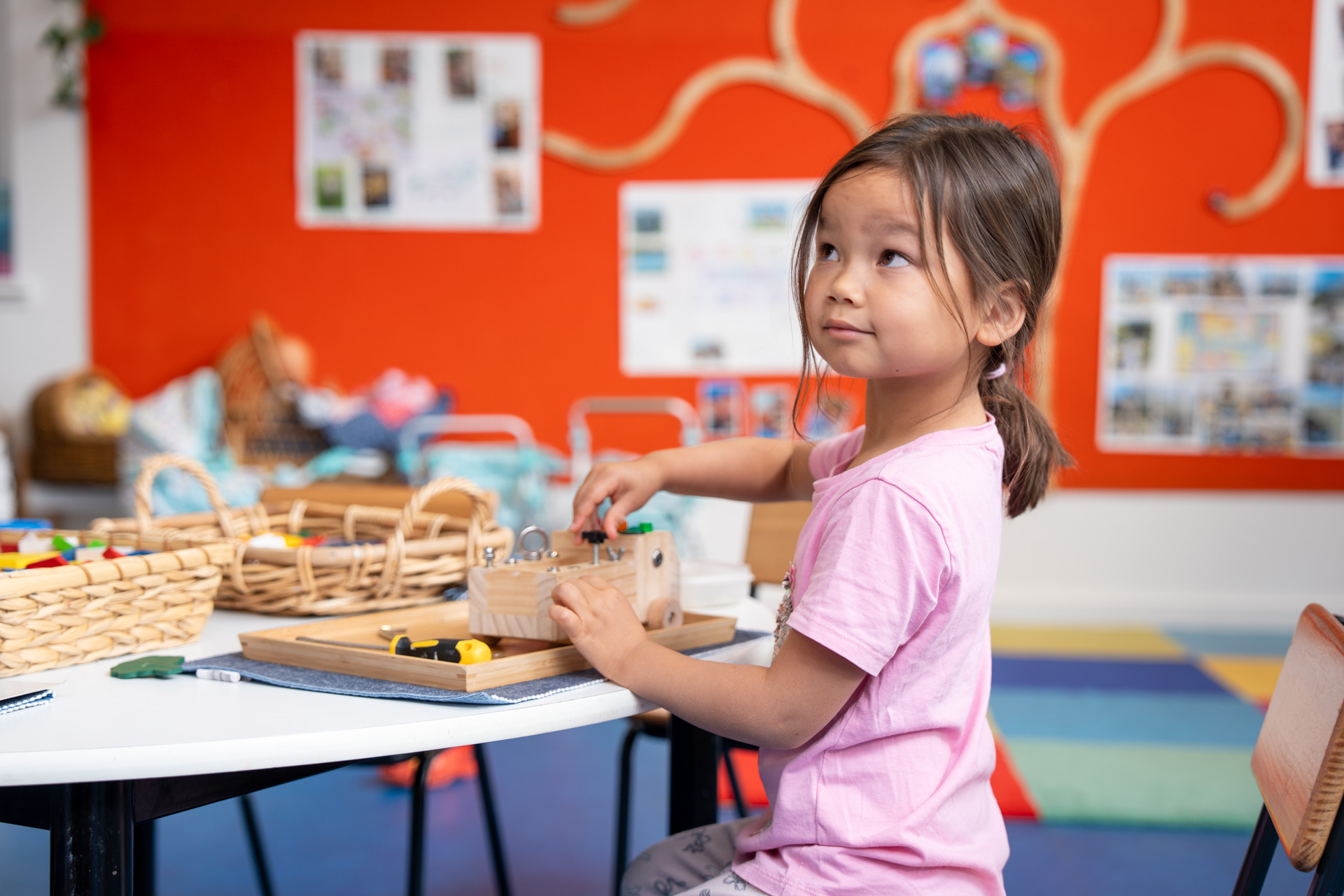
Changing schools in primary: how to make the move gentle
“Should we change schools?”
It’s a question parents often sit with for quite a while before saying it out loud.
Sometimes there has been an obvious problem. More often, it is less clear-cut. Your child may be doing reasonably well academically, but something has changed. They’re unhappy, anxious, bored or increasingly reluctant to go to school.
Or perhaps there is no crisis at all. You simply have a growing feeling that the school which once suited your child no longer does.
Changing schools is a significant decision. Before making it, it helps to slow the process down and ask some practical questions.
Is this a temporary problem or an ongoing one?
Every child experiences bumps at school. A friendship falls apart. They don’t connect with a particular teacher. Learning becomes more challenging. A change at home affects how they cope at school.
A difficult term doesn’t necessarily mean a child needs a different school.
Look at how long the problem has been going on, how often it occurs and how much it is affecting your child outside school.
If your child is regularly distressed, withdrawing from things they previously enjoyed, struggling to attend school or spending each evening recovering from the day, it is worth looking more closely.
What does your child say?
Children don’t always have the language to explain why school isn’t working.
Instead of asking, “Do you want to change schools?”, try asking smaller questions.
What is the best part of your school day? What is the hardest? When do you feel comfortable? When do you feel worried? Who helps you when something goes wrong? If you could change one thing about school, what would it be?
Younger children may reveal more through ordinary conversation, drawing or play than through a formal discussion.
The aim isn’t to make your child responsible for the decision. That remains an adult responsibility. It is to understand their experience.
”At Moerlina, the aim is not for every child to learn in the same way, but for each child to make progress and feel successful”.
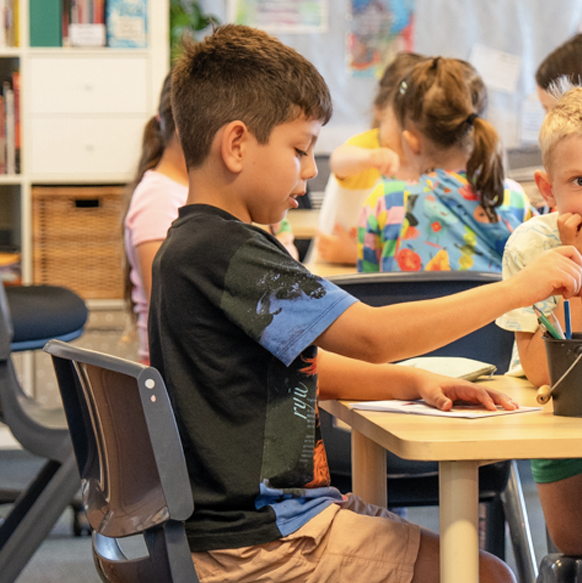
Have you talked openly with the current school?
This is an important step.
Share what you are noticing at home and ask what staff are seeing at school. Sometimes the two pictures are surprisingly different.
Ask what can realistically be changed. There may be supports, adjustments or approaches that haven’t yet been tried.
Give these strategies enough time to work where appropriate and agree on how you will know whether things are improving.
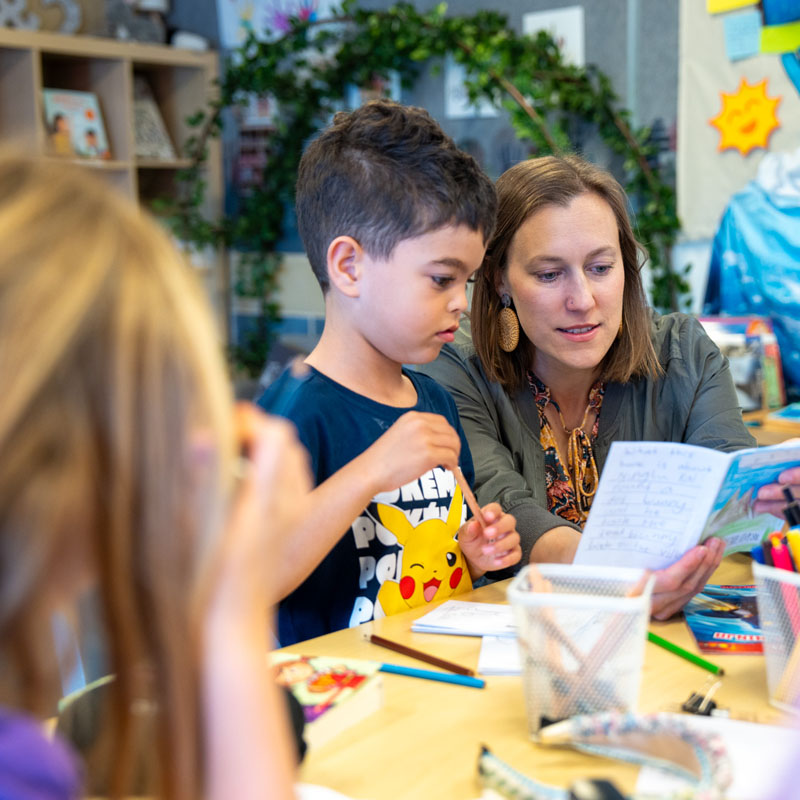
What exactly are you hoping will be different?
Before visiting another school, write this down.
If your child is overwhelmed, perhaps you are looking for a smaller environment. If they are bored, you may want to understand how a school extends capable learners. If friendships are the concern, you might look closely at class structure and how schools help children enter established social groups.
Be specific. Otherwise, it is very easy to walk into an attractive school, enjoy the tour and forget the problem you were trying to solve.
Ask questions that go beyond the brochure
When visiting a prospective school, ask about ordinary days rather than special programs. Ask what happens when things don’t go well. That answer often tells you more about a school than its list of achievements.
How large are the classes? How well do teachers know individual children? What happens when a child is struggling academically? What happens when they are well ahead? How does the school respond to friendship difficulties? How much opportunity is there for movement, creativity and outdoor learning?
At Moerlina, we see the importance of these differences every day. Some children learn best when they can move, make and work with their hands, and benefit from learning that happens both inside and outdoors. Others find large, noisy environments overwhelming and settle more easily in smaller, calmer spaces. Some children are highly capable in some areas but need more time or support in others.
Experienced teachers expect this kind of variation in a classroom. The important thing is how they respond to it: adjusting the level of challenge, providing support when it is needed, and creating different ways for children to engage with their learning. The aim is not for every child to learn in the same way, but for each child to make progress and feel successful.
Watch your child
If possible, let your child spend some time in the prospective school and notice what happens afterwards. Are they curious? Relaxed? Excited? Do they talk about people they met? Can they imagine themselves there?
A child being nervous about a new school is completely normal. What you are looking for isn’t instant confidence, but some early signs that they are beginning to feel comfortable and connected.
We hear this from families who have moved to Moerlina from other schools. Parents often tell us that their children have become happier, calmer or less anxious after settling in. They also value being able to talk regularly with the educators who know their child. For a parent who has spent months worrying about a child who is unhappy at school, knowing that they are being noticed, understood and supported can bring considerable relief.
Of course, changing schools is not in itself the solution. The important thing is finding an environment that is a better fit for the individual child.
Remember: changing schools is not a sign of failure
This can be one of the hardest ideas for parents.
Leaving a school does not necessarily mean the school has failed, the parents have made a poor choice, or the child has failed to cope.
Circumstances change. Children change. Sometimes the fit simply isn’t right anymore.
At Moerlina, we meet many families who are working through this decision, and we understand that parents need more than a school tour to know whether a change will work.
Families considering Moerlina can arrange a two-week trial, giving the child and family time to experience ordinary school life before making a final decision.
Mid-year enrolments are open. Families are welcome to book a tour, make an enquiry or talk with us about whether a trial might be useful.
There is no obligation to have made up your mind before you call.
Other stories from Moerlina School
Making the Transition Gentle
What makes a school feel like a school? And how do you describe the things that make a community feel like your community?

Known, Not Managed
What makes a school feel like a school? And how do you describe the things that make a community feel like your community?
Values
What makes a school feel like a school? And how do you describe the things that make a community feel like your community?