

What if your child was known, not just managed?
Sometimes, as a parent, you know when something isn’t quite right.
Your child may be doing fine at school. Their reports might be fine. Their teacher might say they’re fine. There may be no single incident or problem you can point to, but they’re not thriving.
Perhaps mornings have become harder. Your child is less interested in school than they once were, or they regularly come home exhausted, upset or angry. Maybe they seem to be getting lost in the crowd. Perhaps they’re capable but bored, anxious about getting things wrong, or increasingly reluctant to go to school.
These things don’t necessarily mean there is something wrong with the school, or with your child. But they are worth noticing.
Look for patterns, not bad days
All children have difficult days and periods when school feels harder. Friendship problems happen. Children become tired. A particular subject might be challenging. Sometimes they simply don’t want to go on Monday morning. The question is whether you are seeing an occasional difficulty or an ongoing pattern.
Has your child’s attitude towards school changed significantly? Are Sunday evenings becoming difficult? Are headaches or tummy aches appearing regularly on school mornings? Is your child frequently overwhelmed after school? Have they stopped talking about things they enjoy learning?
Listen, too, to the language your child uses. “I had a bad day” is different from “I hate school”. “Maths is hard” is different from “I’m stupid at maths”.
It can be useful to keep some brief notes for a few weeks. Patterns are often easier to see when they are written down.
Talk to the school
Before deciding that a change is needed, have an open conversation with your child’s teacher.
Rather than beginning with a conclusion, begin with what you have noticed.
You might say, “We’ve noticed that mornings are becoming really difficult, and she is saying she doesn’t want to come to school. What are you noticing here?”
Ask specific questions. Who does your child spend time with? When do they seem happiest? When do they struggle? Are they participating in class? Are they being appropriately challenged? Have teachers noticed changes too?
Good communication between home and school can resolve many concerns. It can also help everyone understand more clearly what is going on.
”Strong relationships help teachers notice the smaller things: when a child needs more challenge, when something is getting in the way of their learning, or when they simply need some extra support.”
Ask whether your child is known
One useful question is surprisingly simple: do the adults at school really know my child?
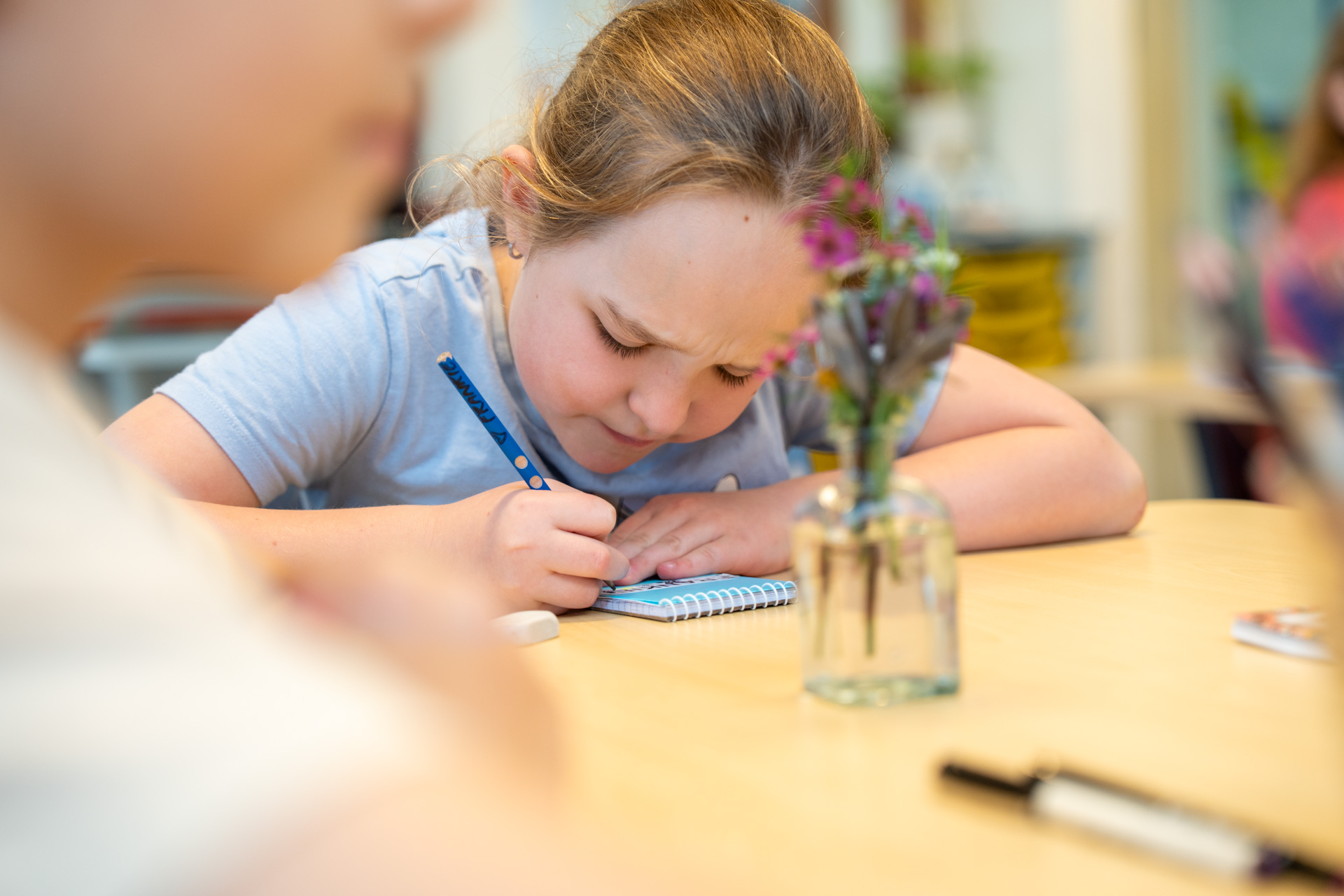
Knowing a child is different from knowing their reading level, maths results or behaviour record. It means understanding what interests them, what worries them, how they respond when something is difficult, when they need encouragement and when they need to be stretched.
Some children manage perfectly well in a large environment. Others do better when relationships are closer, groups are smaller or there is greater flexibility in how they learn. Neither is inherently better. The issue is fit.
Moerlina is small by design, and one of the benefits of this is the opportunity to know children well. Teachers come to understand each child’s strengths, their challenge points and the circumstances in which they learn best. Strong relationships also help teachers notice the smaller things: when a child needs more challenge, when something is getting in the way of their learning, or when they simply need some extra support. For us, knowing the child is an important part of knowing how to teach them.
Think about what your child actually needs
When parents become worried, it is tempting to start researching schools immediately. Before doing that, make a list of what you are actually looking for.
Try to separate the things that matter from the things that simply look impressive on a school tour. Facilities, programs and brochures can tell you something about a school.
The more important questions are often less obvious: How are children spoken to? Do they seem relaxed around their teachers? How well do staff know them? What happens when a child struggles?
Does your child need greater academic challenge? More individual attention? More movement during the day? A quieter environment? Stronger relationships? More opportunities to be creative? More time outdoors? A different social environment?
This is something we see every day at Moerlina. Some children learn best when they can move, make and work with their hands, and benefit from learning that happens both inside and outdoors. Others find large, noisy environments overwhelming and settle more easily in smaller, calmer spaces. Some children are highly capable in particular areas but need more time or support in others. Experienced teachers understand that these differences are part of a normal classroom and adjust their teaching accordingly. The aim is not for every child to learn in the same way, but for each child to be able to engage, make progress and feel successful.
Give yourself permission to consider change
Families sometimes stay in a school because leaving feels like admitting that something has failed. It isn’t.
A school can be a good school and still not be the right environment for a particular child at a particular time.
Children change. Their needs change. What worked beautifully in Kindy or Pre-Primary may not be working several years later.
If you do begin looking elsewhere, take your time where possible. Visit during an ordinary school day. Ask questions. Let your child visit too. Most importantly, notice how the place feels to your child.
At Moerlina, we regularly meet families who are asking these questions, including families considering changing schools during the primary years. We understand that it can be a difficult decision and are always happy to have an honest conversation about whether Moerlina might be a suitable fit.
Families can book a tour, make an enquiry or arrange a two-week trial before making a final decision. Mid-year enrolments are also available.
Sometimes the first step is simply having a look.
Other stories from Moerlina School
Making the Transition Gentle
What makes a school feel like a school? And how do you describe the things that make a community feel like your community?

When to Change Schools
What makes a school feel like a school? And how do you describe the things that make a community feel like your community?
Values
What makes a school feel like a school? And how do you describe the things that make a community feel like your community?